RBC Bearings Incorporated

(NYSE: RBC)
Price
$530
Weighted Avg
$638 (+20%)
Bull
$736 (+39%)
R / R
3 : 1
Edge vs. Consensus
+$0.82 to +$1.64
Long-Form Investment Thesis | Roy Swisa | April 2026
Scroll

The Research Journey

Step 01
The Trigger
The One Big Beautiful Bill Act (H.R. 1, P.L. 119-21, signed July 4, 2025) appropriated $156 billion in new defense spending, including $29 billion for shipbuilding and $25 billion for munitions. I started looking for sole-source beneficiaries with pricing power embedded in those spending lines.
Step 02
The Filter
I searched for semi-monopolies where 70%+ of revenue is sole-source. RBC Bearings surfaced: precision bearings and valves for submarines, aircraft, and missiles, designed in, not substitutable.
Step 03
The Question
The market had already priced RBC well. The question: what is the market NOT pricing?
Step 04
The Discovery
Using Perplexity, I identified all 14 RBC subsidiaries, mapped each to its federal contracting entity, and built automated queries against the USASpending.gov API — 280 calls pulling 0 contracts spanning 21 years. I built a deep map of the Navy and defense contracts RBC has held, revealing procurement acceleration that was not being modeled.
Step 05
The Validation
I ran each assumption through separate AI threads to stress-test and triangulate. The large contract dataset allowed bottom-up estimations that consistently produced the same edge: +$0.82 EPS above consensus.

The Thesis: 20% Return, 3:1 R/R, 19,422 Contracts Behind It

RBC Bearings is a 20% return over two years with 3-to-1 reward/risk from $530. A precision components compounder growing +10% organically from Boeing/Airbus production ramps, long-term agreement repricing (35%+ step-ups, ~$25M annual at full gross profit drop-through), and expanding designed-in content on every major platform. Over 70% of revenue is sole-source.

Street has FY28 at $15.48. We are at $16.30 (Base) and $17.12 (Bull). The $0.82 edge comes from three drivers I surfaced by building a database of 19,422 federal contracts across 14 RBC subsidiaries spanning 21 years, using AI agents to extract, classify, and map each contract to specific programs:

(1) Navy Procurement Acceleration (+$0.46). Two edges the street is not modeling: (1A) a structural shift from reactive to proactive submarine spare parts ordering that doubles order cadence at Sargent Aerospace and VACCO Industries, and (1B) munitions stockpile depletion from Operation Epic Fury at Lockheed Martin Orlando, where RBC’s Industrial Tectonics division is the only Gold-rated bearing supplier.

(2) Boeing/Airbus Volume & LTA Repricing (+$0.08). Production ramps flowing through sole-source content positions.

(3) Dodge Cross-Sell Synergies (+$0.08). Revenue synergies from the Dodge distribution network, plus margin, interest, and operating leverage effects (+$0.21).

56% of the edge sits in defense.

Not in the base case: four call options worth +$2.12 EPS across submarine valve replacement, satellite propulsion, humanoid robotics, and eVTOL.

Consensus → RS Base (+$0.82)

ComponentBase
Consensus FY28E EPS$15.48
+ (1A) Procurement Shift+$0.25
+ (1B) Munitions Stockpile Depletion+$0.22
= Navy Procurement Acceleration+$0.46
+ Boeing/Airbus Volume & LTA Repricing+$0.08
+ Dodge Cross-Sell Synergies+$0.08
+ Margin / Interest / OpLev+$0.21
= RS Base FY28E EPS$16.30
Consensus → RS Base Waterfall

Consensus → RS Bull (+$1.64)

ComponentBull
Consensus FY28E EPS$15.48
+ Navy Procurement Acceleration (1A + 1B)+$0.67
+ Boeing/Airbus Volume & LTA Repricing+$0.08
+ Dodge Cross-Sell Synergies+$0.08
+ A&D Gross Margin Convergence+$0.12
+ SG&A Leverage+$0.23
+ Additional A&D Volume at Bull Assumptions+$0.45
= RS Bull FY28E EPS$17.12
Consensus → RS Bull Waterfall

Navy Procurement Acceleration: +$0.46 (56% of the Edge)

For most of the Navy’s history, submarine spare parts procurement was reactive. A ship arrived at drydock, then the Navy ordered parts. Lead times for specialized components ran three years or longer. Materials readiness at maintenance start sat at 40–50%.

That changed. The Navy now orders spare parts alongside new submarine construction, years before the ship needs them. The target is 90–95% materials readiness at drydock. For RBC, this means order cadence on installed submarine valve content effectively doubles: once for the new vessel, once for the maintenance cycle of vessels already in service.

Four independent sources confirm this is systemic policy:

Navy Procurement Acceleration ComponentRev Alpha ($M)Base EPSSource Quality
1A: Procurement Shift$24M+$0.25
Sargent + VACCO submarine contracts$17M+$0.18HIGH, sole-source confirmed to 2039
MRO / fleet maintenance spares$7M+$0.07HIGH, pattern verified
1B: Munitions Stockpile Depletion$21M+$0.22
Epic Fury rebuild (JASSM, PAC-3, HIMARS)$21M+$0.22HIGH/INFERENCE, 3 sizing methods
Total Navy Procurement Acceleration$45M+$0.46

1A. The Procurement Shift: Four Independent Sources

The Defense Logistics Agency awarded the $5B Maritime Assured Availability Contract in June 2025. The DLA’s own press release described “speed over process,” signaling a category-wide shift to proactive sourcing. A $5B contract is not for a single program.

In April 2025, Navy Rear Admiral Rucker told the Senate Armed Services Committee that submarine supply chain velocity is now a “national security priority,” tying it directly to the goal of building two Virginia-class submarines per year.

My contract database shows the maritime valve procurement category (NAICS 332911) grew 4.7× in obligated value between FY2023 and FY2025. This is the entire federal category, not RBC-specific. A spending acceleration this large, sustained across two fiscal years, is a policy change visible in the data.

Twenty-one years of Sargent Aerospace award history show a documented renewal pattern: large Navy contracts every 3–7 years, with quiet mid-contract troughs between them. The most recent wave was FY2023–24 at $74.4M, following a trough of $0.9M in FY2022. The next wave is expected FY2027–28.

I built the estimate bottom-up from contract data and top-down from earnings call revenue triangulation. Both methods independently produced $0.46. That convergence is the validation.

Sargent Aerospace Award History (FY2018–FY2028E)

Sargent’s Navy awards follow a 3–7 year renewal cycle. Gold bars mark the FY2023–24 award wave ($74.4M). Red marks the FY2022 trough ($0.9M). Faded teal bars are the projected FY2027–28 renewal wave.

1B. Munitions Stockpile Depletion: +$0.22 Inside the Procurement Acceleration

What: Operation Epic Fury (February 28, 2026) depleted precision munitions stockpiles in days. Rebuilding takes 5-7 years.

MunitionQty Fired% ConsumedRebuild TimeProduction RampRBC Rev/Yr
JASSM-ER1,000+~82%Several years396→860/yr max~$0.7M
ATACMS + PrSM320~46%2-3 year lag335 PrSMs contracted thru 2029~$0.6M
THAAD~40% of stockpile~33-40%3-8 yearsNo deliveries since Jul 2023~$0.3M
Tomahawk850+~27%5+ yearsRTX ramp to 1,000/yr~$0.8M
SM-2/SM-3/SM-6~180Not disclosed2-4× increase2-4× production announced~$0.5M
Patriot PAC-3~90Not disclosed2+ yearsUnder existing contracts~$1.2M
JDAM kitsTens of thousandsNot disclosedMore availableHigher volume, lower ASP~$2.0M
Total~$6.1M

Sources: Payne Institute, CSIS, Bloomberg, FPRI, Zona Militar, Army budget documents, publicly available defense reporting.

The $6.1M is current RBC bearing revenue across these programs. At full replenishment ramp (2-4× production increases across five systems), incremental revenue reaches $10-44M depending on scenario. That is the path from depletion to RBC dollars.

Proprietary connection: RBC's Industrial Tectonics Bearings (ITB) is the only Gold-rated bearing supplier at Lockheed Martin Missiles & Fire Control in Orlando, the factory producing JASSM (82% depleted), PAC-3, and HIMARS.

Munitions EPS Sizing

StepBearBaseBull
Incremental revenue$10M$21M$33M
× Blended EBIT margin (40%)$4.0M$8.4M$13.2M
× (1 − 22% tax rate)$3.1M$6.6M$10.3M
÷ 30.2M shares+$0.10+$0.22+$0.34

Three Dates Where Earnings Could Jump

The bottom line: Navy contracts don’t arrive evenly. They come in bursts. We know when the next bursts are coming because we have 21 years of award history. Anyone modeling a straight line through these will be wrong in the quarter it hits.

EVENT 1 — FY2027–28
Sargent Aerospace

The only company that makes Virginia-class submarine valves. Last time a big order came in, it was $74.4M over two years. The year before that, it was $0.9M. That is not a rounding error. That is a 80x swing. The pattern says the next big order lands FY2027–28.

Confidence: HIGH
EVENT 2 — SEP 2026 – MAR 2027
VACCO Industries

VACCO’s current submarine contract expires September 2027. Every time this has happened over 21 years, the replacement was signed before the old one ran out. Every time. No gaps.

Confidence: HIGH
EVENT 3 — 2028
Columbia-class (SSBN-826)

A brand new submarine program. Twelve hulls, $130B+, first one already 65% built. RBC content estimated at $12M or more per hull. Some sell-side estimates go as high as $30M. Either way, this revenue does not exist today. It starts in 2028 and runs into the 2040s.

Confidence: HIGH — 65% complete

The simple version: These are not predictions. They are procurement cycles with dates attached. When the orders land, they show up as revenue the quarter they hit, not spread across a decade. That is how earnings surprises happen.

Growth Algorithm: 10-12% Organic from Three Simultaneous Levers

What: RBC grows from two segments. A&D is 44% of revenue, growing toward 50%+, at 15-20% per year. Industrial/Dodge is 56%, at 4-7%. Blended: 10-12% organic, 3x GDP.

A&D Segment (44% of Revenue, Growing to 50%+): 15-20% Annual Growth

Growth SourceContributionMechanismVisibility
Volume~8-10%Boeing 737 +106% CY25 vs CY24. 787 +67%. Sub build rate rising.HIGH
Price~3-4%LTA repricing at ~35% step-ups. ~$25M/yr at 100% gross margin drop-through.HIGH
Content~4-6%737 MAX +67%/aircraft. 787 +50%. Virginia +74%/10-ship.HIGH

Why it matters: Volume is cyclical. Price resets every 3-5 years. But content gains are permanent. Once RBC is designed into a platform, it stays for the life of that platform. A&D organic growth was 21% last quarter, volume and content compounding.

Industrial / Dodge Segment (56% of Revenue): 4-7% Annual Growth

Growth SourceContributionMechanismVisibility
Volume~1-2%End markets at GDP +1-2%.MEDIUM
Price~2%Annual increases, 70% sole-source, small % of customer cost.HIGH
Share~1-2%New Dodge products CY2026. Cross-sell into Dodge channel.MEDIUM

Why it matters: Dodge's distribution network is 52% of total revenue and largely non-cyclical. Break/fix demand. Even in a recession, a mining conveyor that needs a new bearing gets a new bearing.

Key Stat
21%
A&D organic growth last quarter — volume and content compounding together.

The Re-Rating: A&D at 44% and Climbing, Still Priced as Industrial

What: Multiple expansion as the business mix shifts toward higher-quality revenue.

Why it matters: When A&D crosses 50%, sell-side analysts swap industrial comps for A&D comps. That revision alone generates 5-12 turns of P/E uplift. Precedent: Curtiss-Wright expanded from ~18x (2020, 60% A&D) to ~42x (2026, 75% A&D), 24 turns over five years.

Peer Comparison: Growth Rate vs. Forward P/E
RBC Bearings: P/E Multiple Re-Rating
Pre-Rerating (avg 43x) Re-Rating Period (avg 46x)

Peer Comparison Table

CompanyPriceTrailing P/ENTM EPSFwd P/E (NTM)FY+2 EPSFY+2 P/EEPS Growth
▶ RBC Bearings (RBC)$55265.0x$12.5044.2x$14.8037.3x~20%
Howmet (HWM)$23763.9x$5.3744.1x$6.2437.9x~20%
TransDigm (TDG)$1,19038.3x$50.9323.4x$59.6320.0x~17%
HEICO (HEI)$27754.8x$7.2538.2x$8.0034.6x~10%
Curtiss-Wright (CW)$69954.4x$14.8647.0x$16.5842.2x~12%
ATI Inc (ATI)$14852.1x$4.3633.9x$5.1528.7x~18%

ATI Reclassification: The Re-Rating Precedent

ATI was officially reclassified under GICS from Metals & Mining to Aerospace & Defense effective May 1, 2025. CEO Kim Fields stated: “We are pleased to announce that effective today, ATI’s Global Industry Classification Standard, or GICS code, has been reclassified to aerospace and defense.”

The re-rating that followed was real and measurable:

PeriodForward P/EStock Price
Mar 2025 (pre-reclassification)~17x~$51
Jun 2025 (post-reclassification)~29x~$87
Apr 2026 (today)~35x~$148

The trailing P/E expanded from ~12x as a metals stock (2022–2023) to ~52x today. That is a verified, documented sector reclassification driving a multiple re-rating.

RBC Has Higher Margins Than ATI

MetricRBCATI
Gross Margin45.1% adjusted~26% (HPMC at 23.6% EBITDA margin)
EBITDA Margin32.4%~19% (targeting 20% in 2026)
A&D Revenue Growth+42% YoY+14% YoY

RBC’s margins are substantially higher across the board. ATI is a materials/metals business at its core — capital-intensive, lower-margin — while RBC makes precision-engineered bearings and components with 70%+ sole-source positioning, which commands much better unit economics.

The Moat: 70% Sole-Source, Content Growing on Every Major Platform

When the Navy needs a quiet valve for a Virginia-class submarine, there is no bidding process. Two things make this permanent:

  • Engineering ownership. Sargent Aerospace owns 140+ proprietary valve designs across Virginia and Columbia-class programs. The specification lives in their manufacturing process, not on a transferable drawing.
  • SUBSAFE certification. Every component touching a submarine pressure hull requires the Navy’s mandatory safety qualification. Replacing a certified vendor takes years. No program manager accepts that risk.

My contract database confirms it: zero competitive bids across every submarine valve award in 21 years.

This lock-in applies across 70% of RBC’s revenue. Once a component is qualified into a platform, every unit off the line carries that content for the life of the program. And the content grows: 787 from $400K to $600K per aircraft, Virginia-class from $11.5M to $20M+ per 10-ship block.

Content Gains by Platform

PlatformContent at LaunchContent TodayChange
Boeing 737 MAX$120,000/aircraft$200,000/aircraft+67%
Boeing 787$400,000/aircraft$600,000/aircraft+50%
Airbus A320neoBaseline+20% incrementalAwarded Q3 FY26
Airbus A350~$125,000/aircraft~$255,000/aircraft~2x
Virginia-class submarine$11.5M/10-ship block$20M+/10-ship block+74%

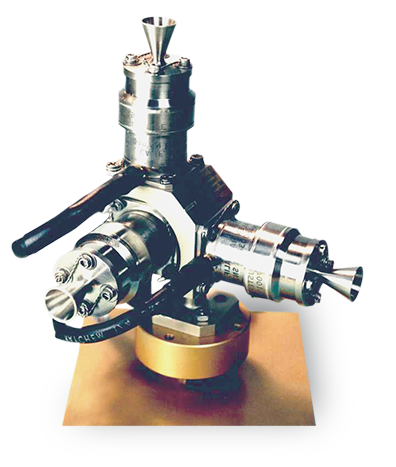
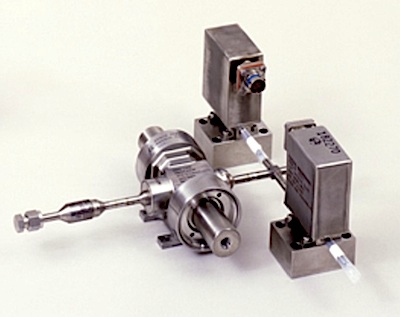
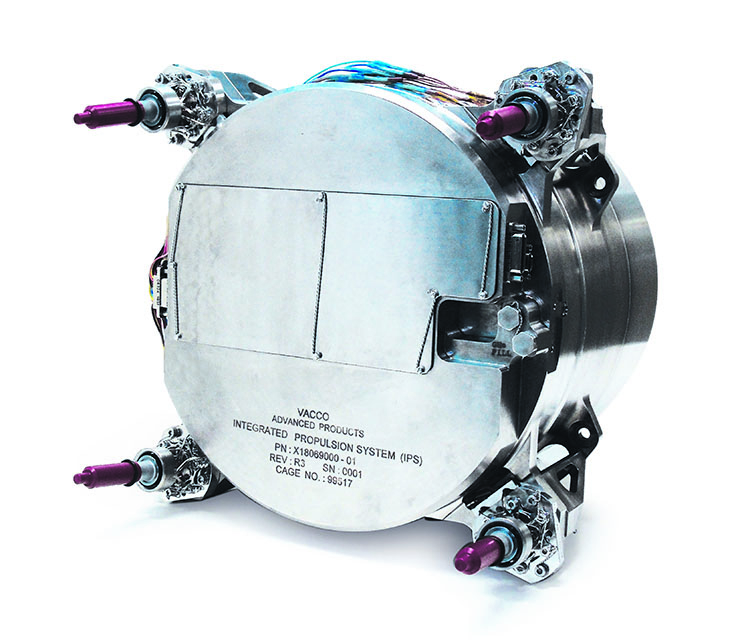
VACCO Industries (acquired July 2025, $275M): Ultra-quiet fluid control systems for nuclear submarines. More than doubled RBC's submarine revenue exposure to over $100M per year.

Product Portfolio: Aerospace & Submarine Systems

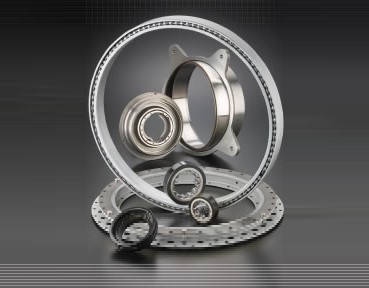
RBC Aerospace Bearings
Aerospace Bearings
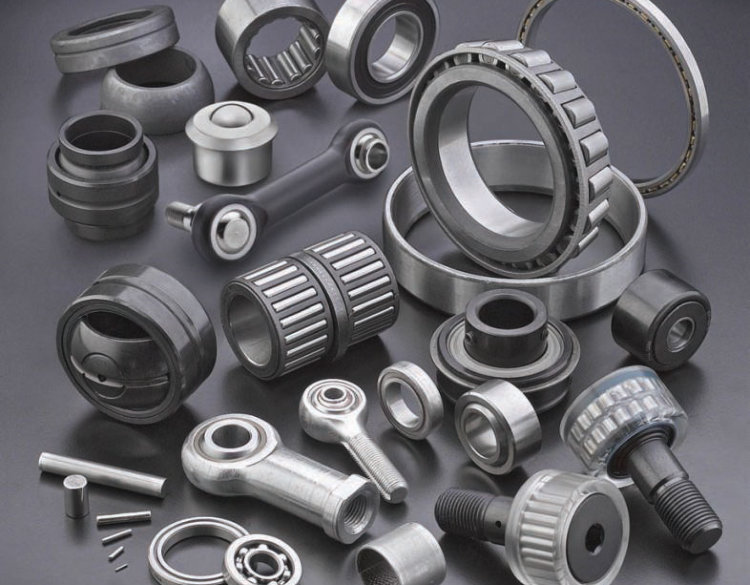
RBC Industrial Bearings
Industrial Bearings
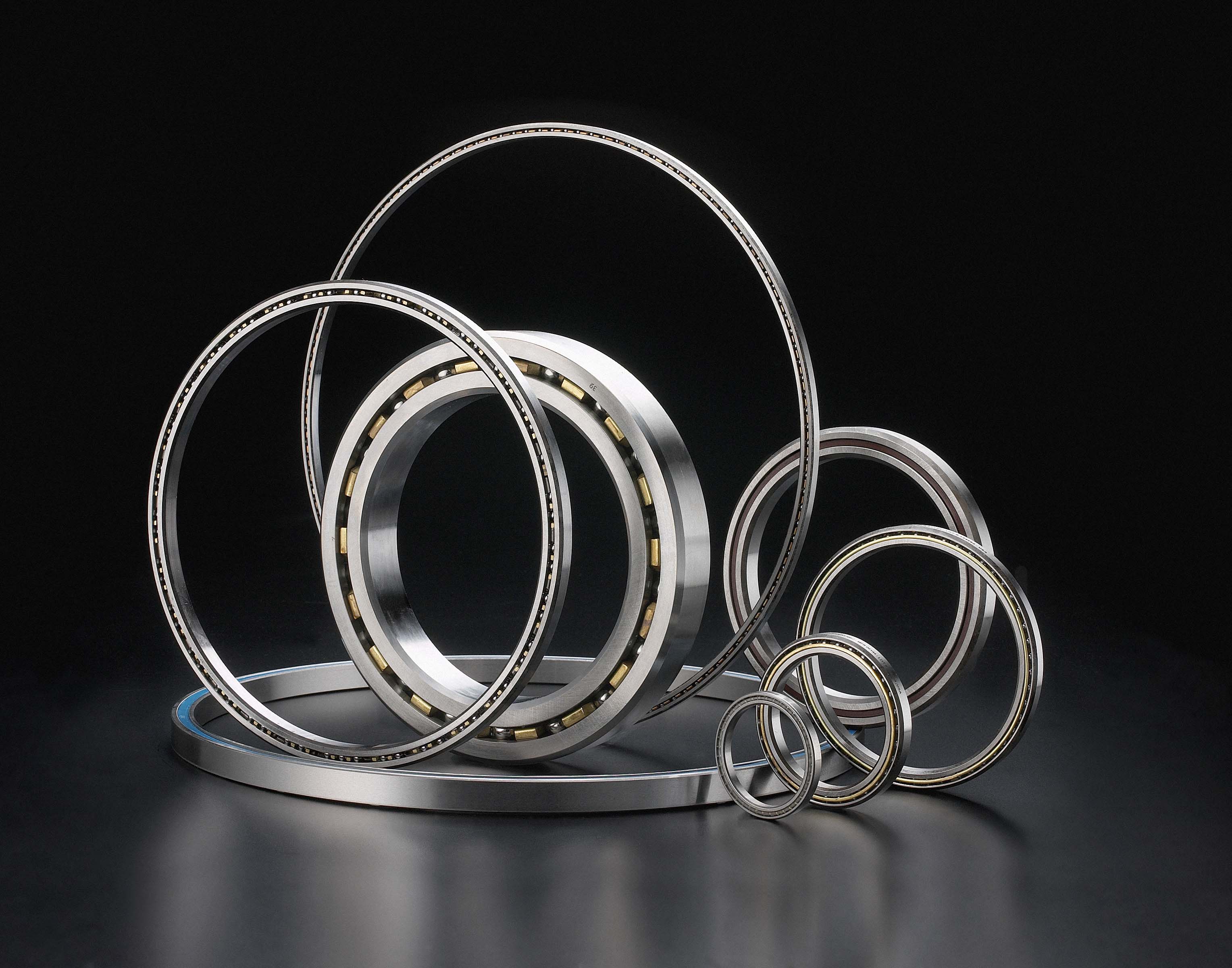
RBC Thin Section Bearings
Thin Section Ball Bearings
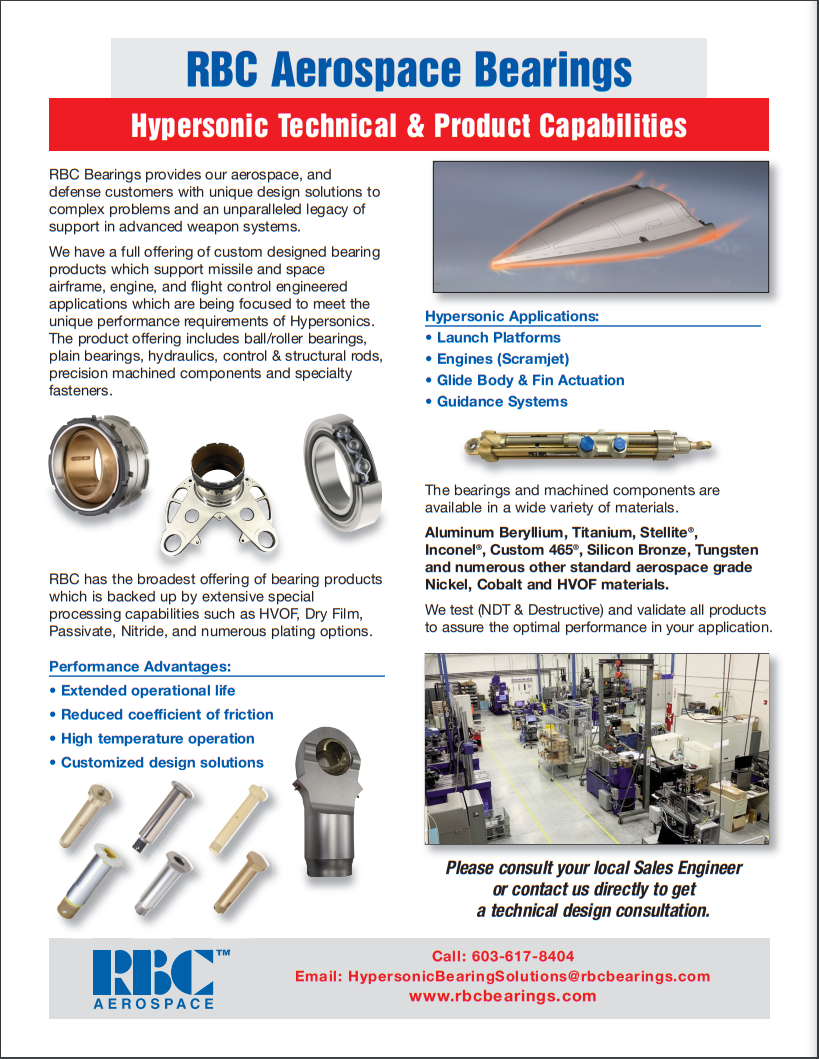
RBC Hypersonic Bearings
Hypersonic Capabilities
VACCO Thruster Valves
VACCO Cryogenic Prevalve
VACCO Launch Vehicle Controls
VACCO Space Integration
VACCO Pressure Reg Module
VACCO CubeSat Propulsion
CubeSat Propulsion System

Why I Have Conviction: 6 Years Maintaining These Components

I was a chief engineer in the Israeli Navy. I maintained the hydraulic systems, bearings, and valves that this thesis is about. I know the difference between a component you can substitute and one where substitution is not a conversation you have.

Submarine hydraulic valves, the components that control how a vessel dives, surfaces, and deploys weapons, are engineered to a specification that lives in the manufacturer’s process. An unqualified substitute is a failure mode. Failure means someone does not come home. That is why no program manager switches vendors, and why RBC holds 70% of its revenue in sole-source positions where no competitor is available even if a customer wanted one.

“Failure means someone does not come home.”

EPS Bridge: +$0.82 Above Consensus, Model-Driven

Full Four-Scenario Bridge (FY2028E)

ComponentBearBaseBullBull+Options
Consensus FY28E EPS$15.48$15.48$15.48$15.48
+ Navy Procurement Acceleration (1A + 1B)+$0.46+$0.67+$0.67
of which: (1B) Munitions Stockpile Depletion+$0.22+$0.34+$0.34
+ Boeing/Airbus Volume & LTA Repricing+$0.08+$0.08+$0.08
+ Dodge Cross-Sell Synergies+$0.08+$0.08+$0.08
+ A&D Gross Margin Convergence (Bull)+$0.12+$0.12
+ SG&A Leverage (Bull)+$0.23+$0.23
+ Additional A&D Volume at Bull Assumptions (D/N $570M + Other A&D)+$0.45+$0.45
+ Margin / Interest / OpLev+$0.21
− Industrial Revenue Miss−$0.45
− Boeing Volume Loss−$0.30
− Margin Compression−$0.35
− SG&A Deleverage & Other−$0.99
+ Chop-and-Swap, Space, Humanoids, eVTOL (+$2.12)+$2.12
= FY28E EPS$13.39$16.30$17.12$19.24

Revenue by Sub-Segment (FY2028E)

ConsensusRS BaseRS BullBear
Total Revenue ($M)$2,262$2,336$2,380$2,173
A&D Revenue$1,079$1,158$1,197$990
— Defense / Navy$510$551$570$467
— Aerospace OEM$400$420$430$380
— Other A&D / Space$169$187$197$143
Industrial Revenue$1,183$1,178$1,183$1,183

Industrial assumptions are identical across scenarios. The entire differentiation is in A&D. The +$0.21 bucket includes the Term Loan B payoff (November 2026), dropping interest ~$25M annually. Calendar event, not assumption.

Scenario Analysis: $428 Bear to $736 Bull, 3:1 Reward/Risk

32x bear: where high-quality industrials trough. 38x base: RBC's post-Dodge midpoint, ~1 turn above current ~37x implied. 43x bull: RBC's own 2022 peak.

ScenarioProbabilityFY28E EPSP/EPrice TargetReturn vs. $530
Bear15%$13.3932x$428−19.2%
Base45%$16.3038x$619+16.8%
Bull40%$17.1243x$736+38.9%
Bull+Options$19.2443x$827+56.1%
Expected Value$638+20.4%

Bull + Hidden Optionality

Starting from Bull EPS of $17.12, four unpriced options layer on:

Hidden OptionIncremental RevenueEPS ImpactCumulative
Bull EPS$17.12
Chop-and-Swap (sub valve replacement) $60M +$0.61 $17.73
Humanoid Robotics $55M +$0.56 $18.29
Space (Kuiper + SpaceX + VACCO) $53M incremental +$0.54 $18.83
eVTOL (Joby, Archer, Lilium) $40M +$0.41 $19.24
Total Options $208M +$2.12 $19.24
Probability-Weighted Return Distribution

Valuation Grid: EPS × Multiple

EPS \ Multiple28x32x36x38x43x
Bear ($13.39)$375$428$482$509$576
Consensus ($15.48)$433$495$557$588$666
Base ($16.30)$456$522$587$619$701
Bull ($17.12)$479$548$616$651$736
Bull+Options ($19.24)$539$616$693$731$827

Highlighted: Bear target ($428 at 32x), Base target ($619 at 38x), Bull target ($736 at 43x). Current implied ($588 at 38x).

The key observation: Even at 28x — below any precedent for a precision aerospace components business in a defense upcycle — base EPS of $16.30 produces $456. The downside is bounded. The upside is not.

Bear Bridge: What Goes Wrong

ComponentEPS ImpactCumulative
Consensus FY28E EPS$15.48
Industrial revenue miss−$0.45$15.03
Boeing volume loss−$0.30$14.73
Margin compression−$0.35$14.38
SG&A deleverage & other−$0.99$13.39
Bear FY28E EPS−$2.09$13.39

Why 15% bear / 40% bull: Bear requires Boeing stalling AND industrial weakening AND defense margins not expanding — all simultaneously. Bull gets 40% because A&D grew 41.5% YoY in Q3 FY26, defense margins expanded 200bps to 42.2%, and 90%+ of the $2.1B backlog is A&D.

EV/EBITDA Cross-Check

ScenarioPrice TargetNet Debt FY28EImplied EVEBITDA FY28EImplied EV/EBITDA
Entry ($530)~$900M (current)~$16.9B~$625M (FY26 run rate)~27x
Bear$428$280M$13.2B$618M21.3x
Base$619$150M$18.8B$731M25.8x
Bull$736$110M$22.3B$763M29.3x

What this tells you: Base target implies 25.8x EV/EBITDA — a discount to HEICO (~32x) and Curtiss-Wright (~35x) despite faster growth. Bull (29.3x) is still below Curtiss-Wright today. The EV/EBITDA cross-check validates the P/E framework.

The 3:1 R/R: How It Is Calculated

MethodCalculationResult
Base-only PW gain45% × ($619 − $530) = 45% × $89+$40.05
Bear PW loss15% × ($530 − $428) = 15% × $102−$15.30
Base-only R/R (the stated "3:1")$40.05 / $15.302.6:1 ≈ 3:1
Full PW gain (base + bull)(45% × $89) + (40% × $206)+$122.45
Full probability-weighted R/R$122.45 / $15.308.0:1

Free Cash Flow: ~$450M Annual by FY28

ConsensusRS BaseRS BullBear
Adj EBITDA ($M)$699$731$763$618
Cash Interest($42)($42)($42)($42)
Cash Taxes($113)($120)($127)($95)
Capex($65)($65)($68)($55)
Change in Working Capital($55)($58)($62)($40)
Levered FCF ($M)$424$446$464$386
FCF / Share$14.04$14.77$15.36$12.78
FCF Yield @ $5302.65%2.79%2.90%2.41%
Cumul. FCF FY26-28$1,093$1,123$1,146$1,029

What's driving FCF: FY25A FCF was $261M, roughly doubling by FY28E. EBITDA expands +$180-240M from thesis drivers. Gross debt collapses from $920M to ~$250M, dropping interest ~$18M annually. Not a yield story. Cumulative ~$1.1B+ FCF over three years creates M&A capacity.

Capital Structure (FY2028E)

ConsensusRS BaseRS BullBear
Net Debt ($M)$190$150$110$280
ND / EBITDA0.27x0.21x0.14x0.45x
Interest Coverage16.6x17.4x18.2x14.7x

Even in Bear, coverage is ~15x and net debt below 0.5x. Balance sheet supports the next acquisition cycle without equity dilution.

Hidden Optionality: +$2.12 EPS, None in Base Case

Chop-and-Swap
+$0.61
Replacing aging submarine valves. First contract: $8.3M (August 2022, 39 assemblies at $213K each). $60M incremental FY2030.
Space
+$0.54
Kuiper sole-source (12 bearing solutions/satellite, LTA through 2028) + SpaceX launch vehicles + VACCO satellite propulsion. $100M total FY2030, $53M incremental vs. ~$48M consensus.
Humanoids
+$0.56
Sample bearings to Boston Dynamics and Agility Robotics. Named on a major sell-side Humanoid 100 list. $55M incremental.
eVTOL
+$0.41
Content on Joby, Archer, Lilium. $40M incremental.
OptionFY2030 RevenueCorrected EPS
Chop-and-Swap$60M incremental+$0.61
Space$100M total ($53M incr.)+$0.54
Humanoids$55M incremental+$0.56
eVTOL$40M incremental+$0.41
Total+$2.12

Space: Bottom-Up Revenue Build & EPS Correction

ProgramContent DetailFY2030 Revenue Est.
Amazon Kuiper12 bearing solutions per satellite × ~$96K/satellite. Sole-source LTA through 2028. 3,236 satellite constellation.~$50-55M
SpaceXFalcon 9 gimbals, grid fins, turbo pump bearings. Reusable launch cadence ~100+/yr.~$25-30M
VACCO Satellite PropulsionCubeSat/SmallSat propulsion valves, thruster systems. Growing commercial space market.~$15-20M
Total FY2030~$100M

Space EPS Correction

StepOriginal (Error)Corrected
Total FY2030 revenue$101M$100M
− Consensus already modeled($48M)
= Incremental$101M$53M
After-tax EPS+$1.09+$0.54

The bottom line: At $530, these options come free. Any single one materializing represents upside to the bull case, not a required condition for it.

Three Risks: CEO is 80, 56% in One Driver, Boeing is Cyclical

Risk 1: CEO Succession

Dr. Michael Hartnett founded RBC and built it to a $17B market cap over four decades. He is 80 years old with no public succession plan. I assign a 35% probability of a transition within three years.

The mitigant is that the management system has been institutionalized. COO Bergeron has over 25 years of tenure. CFO Sullivan provides financial continuity. More importantly, three consecutive acquisitions spanning ten years, across different product categories, have produced the same margin convergence outcome. Sargent, Dodge, and VACCO all followed the same playbook, which means the playbook runs independent of any single individual.

That said, strategic direction risk on a sudden departure is real. A transition without a named successor likely creates a 15–20% drawdown. For investors who understand the quality resides in the system, that drawdown is a buying opportunity. The EPS bridge holds regardless of who is in the chair.

Risk 2: Defense Driver Concentration

This is the structural vulnerability in the thesis. $0.46 of the $0.82 edge above consensus sits in a single driver: the Navy procurement acceleration. That is 56% concentration in one argument.

If the Navy’s shift from reactive to proactive spare parts ordering proves program-specific rather than a systemic policy change, the edge erodes and the base case converges toward consensus. The DLA contract’s explicit “speed over process” language, the 4.7× spending growth across the entire federal valve procurement category, and the Senate testimony framing this as a national security priority all argue against that reading. But concentration risk demands a clear exit signal.

The signal: aerospace and defense organic growth below 12% for two consecutive quarters. If that happens, the procurement acceleration thesis is not materializing and the position should be exited.

Risk 3: Boeing Production Delays

If 737 MAX production stalls at 30 aircraft per month instead of reaching 42 or higher, the aerospace volume contribution loses roughly $0.08 in EPS. This is the most cyclical lever in the model.

It is also the most contained. Content gains are structural: every 787 that comes off the line carries $600,000 of RBC content regardless of how many 787s Boeing delivers that quarter. Long-term agreement pricing is contractually locked in. Both continue independent of production rate. A Boeing delay slows the thesis. It does not break it.

The Floor

Risk-adjusted EPS is $14.85, derived from applying $1.45 of weighted risk across all three scenarios to the $16.30 base. At 38×, that produces $564, roughly where the stock trades today. The current price already embeds the downside. The upside from here is unpriced.

Kill Signals

SignalThresholdAction
A&D organic growthBelow 12%, 2 consec. qtrsExit
CEO departsAny announcementResize to 50%
Boeing stallsBelow 30/mo, 6+ monthsRe-underwrite
Defense budget cutNDAA below $800BExit
VACCO margins stop<200bps next 4 quartersRe-underwrite

Seven Tests: First Arrives May 2026

The thesis is falsifiable by design.

FIRST TEST
May 2026
Q4 FY26 Earnings. A&D organic growth >20%, gross margin approaching 45%.
#EventTimingConfirmsEPS at Risk
1Q4 FY26 earningsMay 2026A&D org >20%, GM ~45%$0.46
2Boeing 737 MAX rateMid-CY202642+ aircraft/month$0.08
3Term loan payoffNov 2026Interest drops ~$25M/yr$0.07
4VACCO follow-onSep26-Mar27Block-buy before expiry$0.16*
5Sargent waveFY2027Large Navy award$0.21*
6A&D crosses 50%FY2027Re-rating catalystMultiple
7Columbia delivery2028$12M+ content per hull$0.16+*

Why Test 7 matters: Columbia-class is the only new ballistic missile submarine program in 40 years. SSBN-826 delivery in 2028 validates RBC’s content estimate on a $130B+ program that runs through 2042. If the content per hull is confirmed at $12M+, it anchors 15 years of visible revenue.

*Tests 4, 5, 7 are sub-components of the Navy Procurement Acceleration (Test 1). Do not sum. Max procurement acceleration at risk = $0.46. Max total = ~$0.82.

The Data Edge: 19,422 Contracts No Analyst Has Read

19,422
Contract Records
$949.5M
Total Obligated Value
14
RBC Subsidiaries
21
Years of Data

We screened every federal contract awarded to RBC Bearings’ 14 subsidiaries over the past 21 years. Four findings stood out from the cohort analysis.

Finding 1: Zero competition. Every submarine valve contract in 21 years was awarded sole-source. One company solicited, one offer received. This is not a trend that could reverse. It is the entire population of awards across two decades, and the answer is zero. RBC owns the engineering drawings, the acoustic technology, the SUBSAFE certifications, and the Navy’s technicians are trained exclusively on their products.

Finding 2: Invisible revenue. $146 million in confirmed subawards from Electric Boat and Huntington Ingalls, sitting in the federal archive, invisible to anyone running a standard USASpending screen. $62.6 million of that is from 2023 to 2026 alone. This is why consensus underestimates the defense exposure.

Finding 3: Procurement acceleration already in the data. Submarine valve awards went from 3 per year in 2022 to 56 in 2025. Combined dollar volume at Sargent and VACCO swung from $1.6 million at trough to $110 million in 2024. The backlog entering 2026 stands at $187.5 million, more than triple four years ago. The Navy moved from ordering spare parts reactively to ordering proactively alongside new construction. That change already showed up in the numbers before we wrote the thesis.

Finding 4: Contracts are getting larger and longer. The number of individual awards has dropped by two-thirds since 2018, but the average contract is now worth 3.2× more and runs for years instead of months. The anchor Sargent contract signed in 2024 runs sole-source through 2039. When RBC wins a contract today, it locks in revenue for a decade or longer.

Appendix: VACCO Reconciliation

Why $3.7M and $100M Are Both Correct

Search USASpending.gov for VACCO Industries and you find $3.7M in Navy awards. The thesis says $100M+/year. Any IC would flag that as a contradiction. It is not. The numbers measure different channels.

The Navy does not buy submarine valves directly from VACCO. It buys submarines from General Dynamics Electric Boat and Huntington Ingalls. Those shipbuilders buy valves from VACCO through private commercial purchase orders that never appear in any government database. USASpending captures $3.7M in direct orders. The other $96M+ flows through the shipbuilders invisibly.

Direct Channel (USASpending)
$3.7M
Visible in public databases. Navy direct purchase orders.
Flow-Through (Actual Revenue)
$100M+
Electric Boat & Huntington Ingalls private commercial POs. Not in any government database.

Three Independent Confirmations

1 — Subaward database: $62.6M in confirmed subcontract records from Electric Boat and Huntington Ingalls to VACCO.

2 — Approved supplier list: Huntington Ingalls lists VACCO as an approved vendor under Valves (updated January 26, 2026).

3 — Prior owner disclosure: ESCO Technologies disclosed $118M TTM revenue before the sale, consistent with $24.3M/quarter run rate in RBC’s most recent filing.

This reconciliation is why I have conviction and most analysts do not. The revenue is real. The channel structure makes it invisible to anyone who stops at the first database.

M&A Track Record: Exposed, Measured, Repeatable

What: Three consecutive acquisitions spanning ten years, same outcome every time.

Why it matters: The management system justifies the premium multiple. If it is repeatable, the next deal creates value. If it is not, 38x is too high.

Sargent Aerospace (2015, ~$195M revenue, ~19% EBITDA margin). Gross margins converged to legacy RBC within 24 months, +1,300 bps. Marine business: $8M → $40M in six years (5×).

Dodge Industrial (Nov 2021, $2.9B, 16.7x EBITDA). ~$70-80M run-rate synergies, ahead of FY2026 target. Gross margins: 36.0% → 47%+, +1,700 bps. Leverage: 7x → 1.7x in four years.

VACCO Industries (July 2025, $275M). +1,000 bps in <12 months. Targeting full convergence.

DealYearSizeEntry MarginImprovementvs. Plan
Sargent2015~$195M rev~19% EBITDA+1,300 bps24 months
Dodge2021$2.9B (16.7x)~25% EBITDA+1,700 bps2 yrs early
VACCO2025$275M25-30% gross+1,000 bps+<12 mo in

The mechanism is identifiable (vertical integration, manufacturing migration, supply chain consolidation) and measurable in public filings. The system is institutionalized, which matters because the CEO is 80.